


activated sludge densification system for biological wastewater treatment – inDENSE®
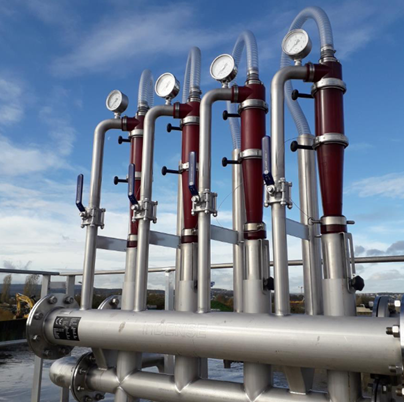
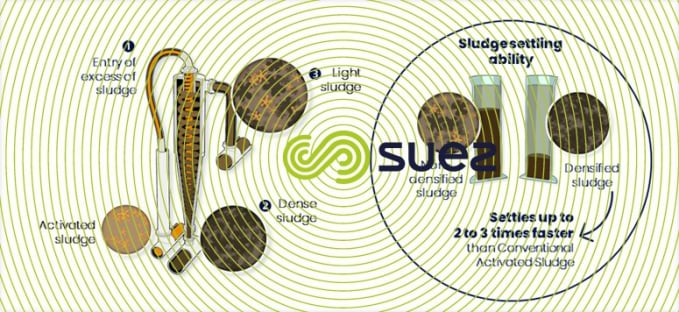
inDENSE® is a sludge densification system based on gravimetric selection of biomass, using hydrocyclones installed on the excess sludge extraction line.
Sludge with superior settling characteristics is recovered underflow of the hydrocyclones and then returned to the head of the biological treatment process, while sludge with poor settling characteristics passes overflow and is discharged to the sludge line.
This system improves clarification, reduces the environmental footprint, and ensures high-quality treated water.
This sludge densification system is applicable to activated sludge treatment with biological phosphorus removal (either with a contact zone or an anaerobic zone). It meets the requirements of both new installations (Greenfield) and existing plants (Brownfield).

Key figures
In greenfield application
- Up to 30% footprint reduction due to civil work savings. The system allows for higher concentration of activated sludge through the densification effect.
In brownfield application
- Up to +30% organic load treatment capacity with the same structures
OR
- Up to +60% hydraulic capacity during rainy weather
Among our references
- K&C Valley (India) - 1,000,000 PE – Brownfield
- Czernica (Poland) – 17,000 PE – Greenfield
- Silkeborg (Denmark) - 95,000 PE – Brownfield
- Dijon Eau Vitale (France) - 400,000 PE – Brownfield
- Montbarrey (France) – 2,700 PE - Greendfield
- The improvement of sludge settling ability (SVI) allows either increasing the concentration in the tanks (brownfield) or reducing the volume of the tanks and/or clarifiers (greenfield).
- The stabilization of sludge settling ability (SVI) makes it possible to control seasonal variations by reducing filamentous bulking episodes and to enhance operational reliability.
- A compact and economic system.
- Easy implementation on an existing plant.
- Reduction of operating cost through optimization of biological phosphorus removal and sludge recirculation rates.
Bookmark tool
Click on the bookmark tool, highlight the last read paragraph to continue your reading later
